About Us

DHANSHREE READY MIX CONCRETE

Strength. Precision. Reliability.

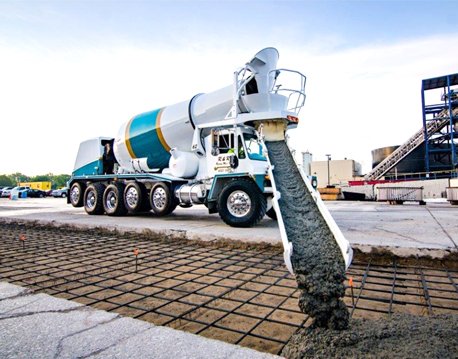
Dhanshree RMC provides high-quality Ready-Mix Concrete backed by advanced technology, expert supervision, and strict quality control. Established in 2020, we operate with a fully automated batching plant to ensure consistent, durable, and timely concrete solutions for residential, commercial, and infrastructure projects across Hinganghat and surrounding areas.

Our Foundation is Built on Knowledge

At Dhanshree RMC, we believe concrete is more than just a mix — it’s the result of science, expertise, and precision systems. By blending modern technology with proven industry practices, we deliver concrete solutions that stand the test of time.

MISSION

To consistently deliver high-quality Ready-Mix Concrete with precision, reliability, and punctuality, powered by the finest materials, skilled professionals, and smart technology. We aim to create lasting value for our customers through responsive service, operational efficiency, and a commitment to excellence in every delivery.
VISION

To be a leading force in transforming the construction industry across Hinganghat and beyond by becoming the most trusted, innovative, and quality-focused Ready-Mix Concrete brand. We envision a future where Dhanshree RMC contributes to building stronger, smarter, and more sustainable infrastructure for generations to come.

Understanding the Significance of Concrete Ingredients

The quality of concrete depends not only on the materials used but also on the technology applied and the expertise behind it. Each ingredient—cement, aggregates, water, and admixtures—plays a crucial role in determining concrete's strength, durability, and performance.

Team Member
0 +
Winning Award
0 +
Client Review
0 +
Complete Project
0 +
01. Historical Context: A Legacy of Innovation
  • Ancient Civilizations: The Egyptians, Greeks, and Romans pioneered early forms of concrete using lime and volcanic ash.
  • Modern Breakthroughs: John Smeaton developed hydraulic lime in 1756, and Joseph Aspdin patented Portland Cement in 1824, laying the foundation for modern concrete.
  • India’s Evolution: Cement manufacturing began in the early 1900s. By 1953, Indian Standards (IS Codes) were introduced, formalizing concrete quality and testing protocols nationwide.
  • Types of Crushers: The shape and texture of aggregates are influenced by the crushing equipment—Jaw, Cone, and VSI crushers.
  • VSI Advantage: Vertical Shaft Impact (VSI) crushers produce well-shaped, angular aggregates, ideal for high-strength concrete, although at a higher operational cost.
  • Optimized Process: A multi-stage crushing setup (Jaw → Cone → VSI) delivers aggregates with superior gradation, enhancing workability, bonding, and compressive strength in the final concrete mix.

Cement

  • Types Used: OPC (Ordinary Portland Cement), PPC (Portland Pozzolana Cement), PSC (Portland Slag Cement)
  • Key Properties:
    • Setting Time – Influences construction speed and finishing
    • Soundness – Ensures long-term stability
    • Fineness & Consistency – Impacts hydration and workability

Fly Ash

  • A by-product of thermal power plants, fly ash improves concrete performance when used correctly.
  • Benefits:
    • Enhances cohesiveness and durability
    • Improves economy by reducing cement usage
    • Ideal for self-compacting concrete (SCC), pumpable mixes, and high-volume pours
    • When blended with OPC, it enhances long-term strength and performance

Coarse Aggregates

  • Must be hard, clean, and durable
  • Shape and gradation directly affect concrete strength, compaction, and workability
  • Aggregates produced through VSI crushers are cubical and non-flaky, making them ideal for high-durability concrete

Fine Aggregates

  • Includes natural river sand or manufactured sand (M-sand)
  • Must be well-graded for optimal packing
  • Crushed sand often contains high silt content and flaky particles, which require proper screening and washing
  • Close grading ensures better workability, density, and low permeability, contributing to long-lasting concrete
  • Must be clean, potable.
  • Quality affects setting time and strength.
  • pH > 6, low sulphates and chlorides are essential.
  • Plasticizers & Superplasticizers improve workability and reduce water/cement ratio.
  • Polycarboxylates offer high fluidity, essential for modern concrete.

What Makes High-Quality Concrete?

High-quality concrete is not accidental — it’s the result of:

Careful Material Selection

Using only tested, graded, and approved raw materials

Modern Equipment & Technology

Automated batching, VSI crushing, and advanced mixing systems

Skilled & Trained Manpower

Experienced teams ensuring accuracy and consistency

Robust Quality Control Systems

Continuous testing and monitoring at every stage

The DHANSHREE RMC Advantage

✔️ High-Speed, Large-Scale Production
Automated batching and efficient processes enable fast, bulk concrete output.

✔️ Timely & Reliable Site Delivery
Punctual dispatch ensures smooth project timelines and reduced downtime.

✔️ Consistent & Controlled Quality
Every batch meets rigorous quality standards with in-house lab testing.

✔️ Reduced On-Site Labor
Ready-to-use concrete minimizes mixing work and manpower on site.

✔️ Minimal Material Wastage
Precision batching and controlled production reduce spillage and excess use.

✔️ Cleaner, Eco-Friendly Operations
Sustainable practices and optimized resource use support a greener future.

Limitations of Site-Mixed Concrete

Slower Construction Pace
Manual mixing leads to delays and reduced productivity.

Frequent Project Delays
Weather, labor issues, and inconsistent batching often stall progress.

Inconsistent Concrete Quality
Manual proportions and varying conditions result in unpredictable strength and durability.

Higher Risk in Cement Handling
Unprotected handling increases chances of health hazards and material loss.

Increased Spillage & Material Wastage
On-site operations lack precision, leading to significant resource wastage.

Dust & Air Pollution Hazards
Open mixing generates dust, causing environmental and health concerns.

Our Process: From Mix Design to Delivery

🔬 Intelligent Concrete Mix Design

Key Activities & Assurances
– Mixes tailored to specific structural needs
– Evaluation of materials from multiple sources
– Field trials to validate cube & beam strength

⚖️ Quality-Centric Batching

Key Activities & Assurances
– Accurate weigh batching, eliminating quantity errors
– Moisture correction in aggregates
– Admixtures used to retain workability without adding extra water

Precision Mixing & Transportation

Key Activities & Assurances
– 3 batching plants (auto & mobile), 20+ transit mixers, 4 pumps
– No retempering allowed to maintain integrity
– Slump retention techniques used for consistent quality

Placing & Compaction

Key Activities & Assurances
– Recommended use of vibrators (needle/external) for void-free concrete
– Continuous pour to avoid cold joints
– Efficient pumping and chute systems for placement

💧 Immediate Curing

Key Activities & Assurances
– Early curing to prevent cracks and ensure hydration 
– Use of plastic covers in high-temperature conditions
– Controlled ambient settings maintained on-site

📊 Hardened Concrete Testing

Key Activities & Assurances
– IS 516-compliant cube & beam testing
– Real-time test reports
– In-house lab assurance for every batch

🚫 Avoiding Failures by Design

Key Activities & Assurances
– Best practices to prevent shrinkage, segregation, honeycombing, and cold joints
– No water to be added at the site
– Dhanshree RMC is not liable for altered mixes

Types of Concrete

A basic mix of cement, sand, aggregates, and water—without steel reinforcement. It is strong in compression but weak in tension and is mostly used for non-structural work.

  • Common Ratios: 1:2:4 and 1:3:6 (Cement : Sand : Aggregates)
  • Applications:
    • Foundation base (below RCC footings)
    • Non-load-bearing slabs
    • Sidewalks, pathways, parking pads
    • Flooring for verandas and plinths

RCC incorporates steel reinforcements (rebars) within concrete to handle tensile stresses. It combines the compressive strength of concrete and the tensile strength of steel.

  • Thermal Compatibility: Steel and concrete expand at similar rates, reducing cracks.
  • Applications:
    • Beams, slabs, columns, footings
    • Water tanks, bridges, dams
    • Pavements, chimneys, retaining walls
    • Underground and underwater structures

FRC is concrete containing dispersed fibres (steel, glass, polypropylene, carbon, etc.) that increase toughness, crack resistance, and durability.

  • Fibre Aspect Ratio: 30–150 (Length to Diameter)
  • Uses: 0.1%–3% of total volume
  • Applications:
    • Industrial floors, machine foundations
    • Airport pavements, bridge decks
    • Dams, spillways, and thin shell structures

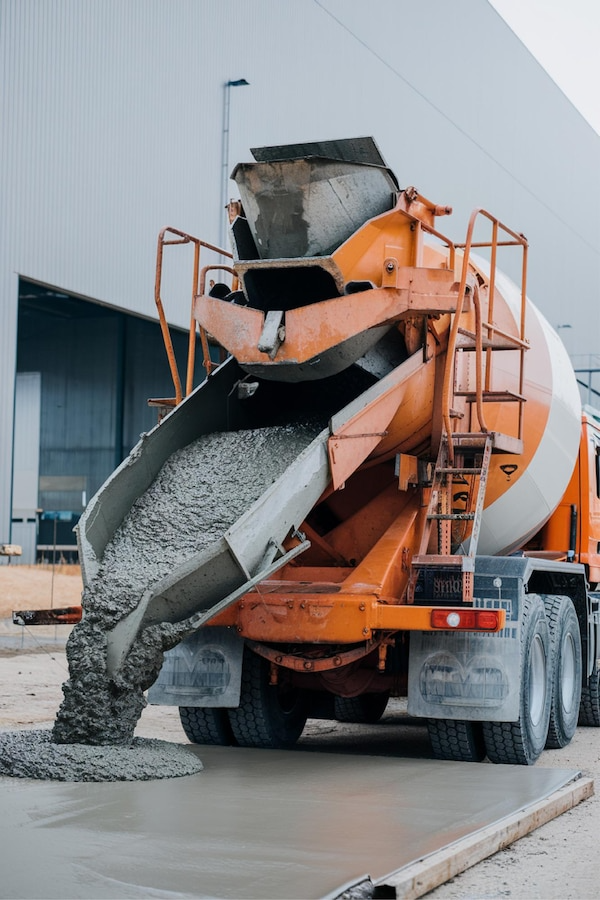
RMC is factory-mixed concrete, delivered to the site in transit mixers. It ensures quality control, consistency, and is ideal for projects requiring speed and precision.

  • Mixed in controlled conditions
  • Retarders added to delay setting during transport
  • Applications:
    • Roof slabs and beams
    • Large-scale pavements
    • Dams, highways, tunnels
    • Industrial and commercial buildings

Precast elements are cast and cured in a controlled environment, then transported and assembled on-site. This allows for faster installation and higher precision.

  • Advantages:
    • Controlled curing and finish
    • Faster project timelines
  • Applications:
    • Beams, slabs, columns, wall panels
    • Culverts, drainage channels
    • Modular housing, bridges

A method where steel tendons are tensioned to introduce compressive stress before the concrete is subjected to loads.

  • Pre-tensioning: Tendons are tensioned before casting.
  • Post-tensioning: Tendons are inserted after curing and tensioned in place.
  • Benefits:
    • Reduced deflection
    • Higher load-bearing
    • Longer spans with thinner sections
  • Applications:
    • Flyovers, bridges, girders
    • Multi-storey buildings
    • Parking decks, retaining walls

Designed to reduce self-weight using:

  • Lightweight Aggregates: Pumice, expanded clay, thermocol
  • Aeration: Injecting foam or gas (AAC blocks)
  • No-fines Concrete: Only coarse aggregates used
  • Benefits: Easy handling, thermal insulation, reduced load on structure
  • Applications:
    • Roof insulation layers
    • Long-span decks
    • Precast blocks and panels
    • Partition walls

Made using heavy aggregates like barite, magnetite, and iron ores to increase weight and radiation resistance.

  • Density: 3360–3840 kg/m³
  • Applications:
    • Nuclear power plant shielding
    • Medical X-ray and MRI rooms
    • Research labs and bunkers

Engineered for superior strength, durability, and low permeability. Contains mineral admixtures (fly ash, silica fume) and superplasticizers.

  • Water-Cement Ratio: ≤ 0.30
  • Features: High compressive strength, reduced cracking
  • Applications:
    • Marine and coastal structures
    • Power plants, bridges
    • Chemical plants, research centres

Highly flowable concrete that spreads and fills formwork without vibration. Ideal for congested reinforcement.

  • Contains: Superplasticizers, viscosity-modifying agents
  • Applications:
    • Beam-column joints
    • Deep foundations
    • Complex formwork
    • High-rise construction

Designed for pumping through pipes using pumps. Modified with admixtures for better flow and cohesion.

  • Applications:
    • Tall buildings
    • Tunnels
    • Bridges and underwater works
    • High-speed placements in difficult terrains

A lean concrete mix with a high aggregate-to-cement ratio used as a sub-base in road and pavement construction.

  • Advantages: Good load transfer, economical
  • Applications:
    • Road bases
    • Rigid pavements
    • Industrial roads

A high-strength, durable mix used as the top layer of rigid pavements to resist heavy vehicular loads.

  • Applications:
    • National highways and expressways
    • Airport runways
    • Container terminals and ports

Types of Concrete Finishes

Below are the most commonly used concrete surface finishes, each suited for specific functional or aesthetic requirements:

1

Trowelled Finish

A smooth, dense finish achieved by manually or mechanically troweling the surface after concrete is poured and leveled.

  • Tools: Hand trowel or power trowel
  • Application Areas: Roof slabs, floors, internal concrete surfaces
  • Features: Clean, fine finish; ideal for coatings and tiles
2

Broom Finish

After troweling, a broom is dragged across the surface to create rough texture.

  • Purpose: Improves traction and slip resistance
  • Ideal For: Parking lots, driveways, sidewalks
  • Finish: Coarse texture; functional rather than decorative
3

Exposed Aggregate Finish

Top layer of cement paste is removed to expose decorative aggregates beneath.

  • Method: Use surface retarders, then wash
  • Materials: Colored stones, pebbles, shells, glass, etc.
  • Application: Porches, decorative walkways, pool decks
  • Benefits: Aesthetic appeal + anti-slip surface
4

Salt Finish

Rock salt is broadcast onto wet concrete and later washed away to leave a pitted surface.

  • Texture: Fine, uniform depressions
  • Use: Around swimming pools and wet areas
  • Purpose: Slip resistance and surface texture
5

Stamped Concrete Finish

Stamped patterns are pressed into freshly placed concrete using textured mats or stamps.

  • Design Options: Brick, stone, tile, wood patterns
  • Add-on: Color pigments can be added for visual appeal
  • Application: Driveways, patios, theme parks
  • Purpose: Decorative, cost-effective alternative to natural materials
6

Stained/Colored Concrete Finish

Color is introduced to concrete through surface staining or pigment admixtures.

  • Types: Acid staining, integral coloring, dry-shake hardeners
  • Finish: Vibrant or subtle color tones
  • Protection: Sealer applied to preserve color
  • Usage: Lobbies, interiors, showrooms, patios
7

Polished Concrete Finish

Concrete is mechanically ground and polished using diamond abrasives.

  • Process: Multi-step grinding to achieve shine
  • Finish: Durable, reflective, and low maintenance
  • Ideal For: Industrial floors, warehouses, commercial buildings
8

Concrete is mechanically ground and polished using diamond abrasives.

  • Process: Multi-step grinding to achieve shine
  • Finish: Durable, reflective, and low maintenance
  • Ideal For: Industrial floors, warehouses, commercial buildings

Swirled or curved patterns are made using a trowel or float on the wet surface.

  • Texture: Aesthetic and functional pattern
  • Use: Patios, walkways, outdoor slabs
  • Benefits: Visual interest + slip resistance